Turkey has rapidly become one of Europe’s fastest-growing hubs for bicycle and e-bike manufacturing, exporting high-performance frames to Germany, the Netherlands, France, and the UK. In modern cycling frame production—covering road bikes, mountain bikes, gravel bikes, and urban e-bikes—manufacturers must balance lightweight thin-walled construction with rock-solid weld integrity and rapid model changeovers.
However, fabricating main frame triangles, head tubes, and seat tubes from Ø40mm round metal tubing requires intricate 3D fish-mouth saddle cuts, compound miter angles, and internal cable-routing slots. Traditional mechanical cutting and notching methods struggle to maintain tight fit-up tolerances without crushing thin pipe walls. To overcome these bottlenecks, a leading Turkish bicycle frame manufacturer upgraded their workshop with the LONX LASER K6, joining modern fabricators investing in high-speed fiber tube cutting machines to automate complex tubular profiling.
Customer Location: Manisa / Izmir Industrial Zone, Turkey
Industry: Bicycle & E-Bike Frame Manufacturing
Machine Model: LONX LASER K6 High-Speed Fiber Laser Tube Cutter
Primary Material & Profile: Round Metal Tubing (Chromoly Steel, High-Tensile Steel, and Aluminum Alloy)
Workpiece Dimension: Outer Diameter Ø40mm (thin-to-medium wall thickness)
Key Applications: Bicycle main triangles, head tubes, down tubes, seat tubes, and e-bike structural chassis
A durable, aligned bicycle frame depends on seamless tube-to-tube intersections where curved "fish-mouth" (saddle) ends wrap tightly around adjoining tubes. Prior to installing the K6, the Turkish manufacturer relied on circular cold saws, mechanical tube notchers, and manual drilling jigs to process Ø40mm round tubes. This conventional multi-step setup created three persistent production bottlenecks:
Weld Gaps from Inconsistent Fish-Mouth Cuts: Mechanical hole saws and milling cutters wore down quickly across batches, producing slight contour variations at tube intersections that slowed down TIG/MIG and robotic welding.
Clamping Deformation on Thin-Walled Ø40mm Tubing: Lightweight bicycle frames rely on thin-walled tubing to reduce overall bike weight. Standard mechanical vises and heavy chuck jaws frequently dented or turned the Ø40mm round cross-section into an oval during high-speed cutting.
Slow Changeovers Between Frame Geometries: Switching production between different frame sizes (such as 52cm vs. 56cm road frames) or e-bike models required manual fixture swaps, tool changes, and lengthy trial runs.
To fulfill growing European OEM contracts with tighter delivery windows, the factory searched for automated tube cutting machines capable of executing multi-angle profiling and slotting in one continuous cycle without deforming thin-walled pipes.
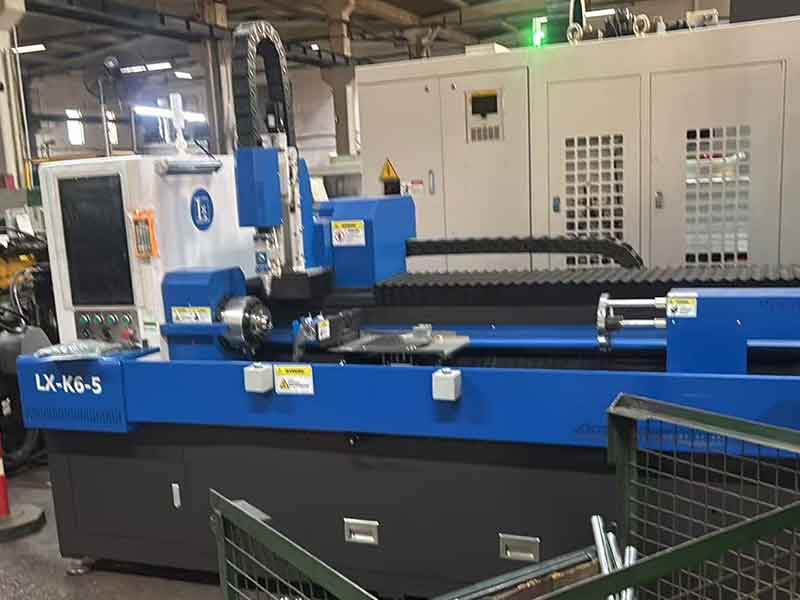
The manufacturer integrated the LONX LASER K6, a high-dynamic fiber laser pipe cutting system purpose-built for small-to-medium round and shaped tubing.
| K6 Core Feature | Production Impact on Ø40mm Bicycle Frame Tubing |
| Low-Inertia Pneumatic Self-Centering Chucks | Holds thin-walled Ø40mm round tubes securely with adjustable clamping pressure, preventing ovality or surface marks |
| High-Speed Multi-Axis Rotary & Linear Motion | Cuts complex 3D fish-mouth saddle contours, compound miters, and internal cable slots in a single pass |
| Burr-Free Fiber Laser Kerf Quality | Delivers smooth, oxidation-free edges ready for immediate TIG or robotic welding without manual filing |
| Digital 3D CAD/CAM Program Switching | Imports 3D frame tube files directly, enabling instant changeover between bicycle sizes without physical tooling swaps |
Using LONX LASER’s dedicated 3D tube nesting and cutting software, engineers import bicycle frame CAD models directly into the K6 CNC system. The fiber laser executes complex saddle intersections, compound angles, bottle-cage mounting holes, and internal brake/derailleur cable slots on Ø40mm round tubes in one continuous operation—ensuring gap-free joint alignment.
Lightweight cycling tubing cannot tolerate chuck marks or cross-sectional crushing. The K6 utilizes precision pneumatic chucks with intelligent pressure regulation, keeping Ø40mm round tubes centered and stable during high-speed rotation without deforming thin walls.
Unlike mechanical notchers that leave heavy inner and outer burrs requiring manual grinding, the K6 produces clean, perpendicular edges ready for immediate weld jigging. Switching between different bicycle frame geometries requires zero physical die changes—operators simply load the next CNC file and begin cutting.
Within three months of commissioning the LONX LASER K6, the Turkish bicycle frame factory achieved substantial operational improvements:
250% Increase in Frame Tube Output: Consolidating sawing, notching, and slot drilling into one automated laser cycle more than tripled daily throughput for Ø40mm frame tubes.
Tighter Weld Fit-Up & Less Rework: Laser-cut saddle contours held intersection tolerances within ±0.03mm, accelerating robotic welding speeds and cutting post-weld frame alignment rework by over 75%.
100% Elimination of Manual Deburring: Smooth, burr-free cut edges removed manual filing and grinding stations, freeing up 4 skilled operators for frame assembly and quality inspection.
Instant Multi-Model Flexibility: Digital program switching reduced changeover times between different bicycle sizes and e-bike models from hours to seconds.
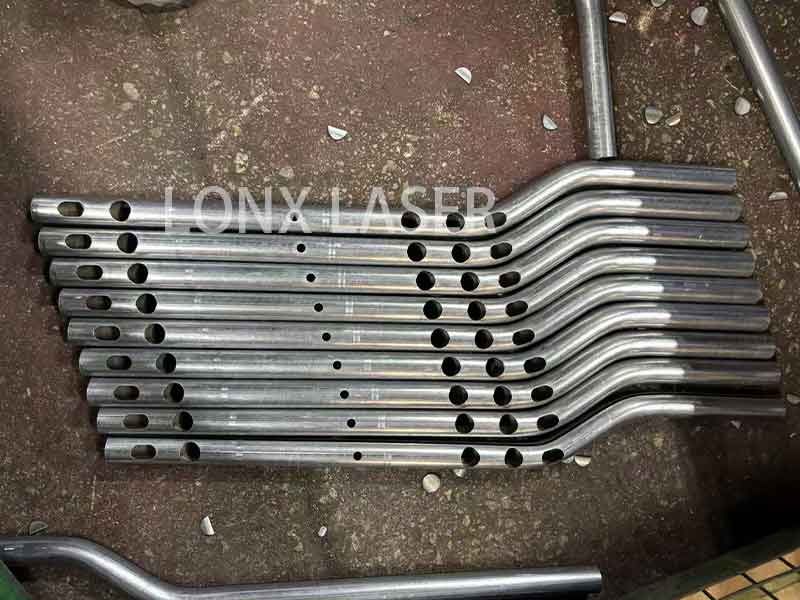
In the competitive global bicycle and e-bike market, frame alignment accuracy and production agility directly impact profitability. Modern fiber tube cutting machines like the LONX LASER K6 replace multi-station mechanical notching with fast, repeatable digital precision—transforming raw Ø40mm round tubing into weld-ready frame components in seconds.
Ready to streamline your tubular frame production line? Contact LONX LASER today to request free sample cutting tests on your tubing or consult with our engineering team on the K6 series.

